CECOS International and Geosyntec Consultants proposed changes to the groundwater monitoring program and faced lingering concerns about the site
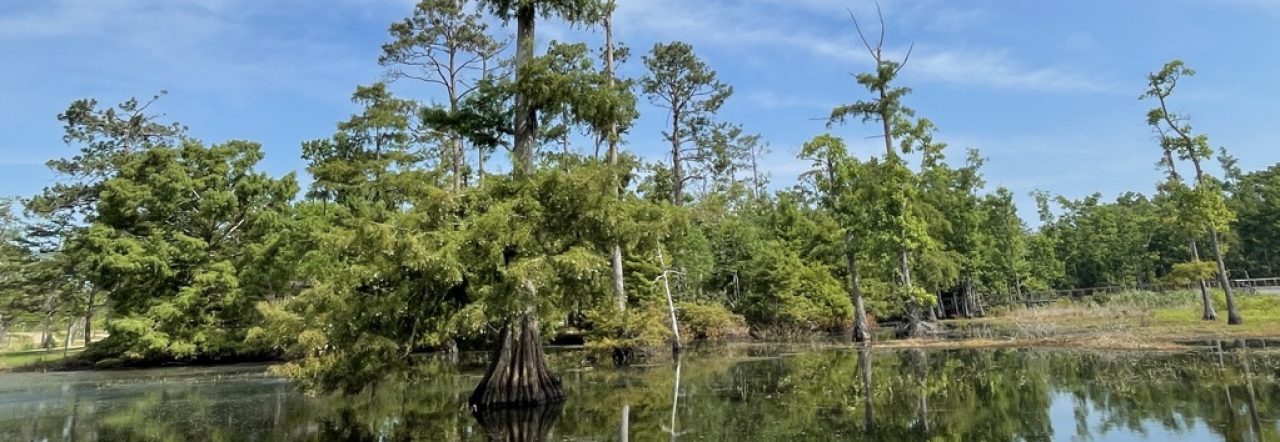
Last week, CECOS International and Geosyntec Consultants held a public meeting at Westlake City Hall to present a revised groundwater sampling and analysis plan for Willow Springs, a hazardous waste site north of Westlake.
Warren Brady, senior principal consultant with Geosyntec, said that CECOS previously monitored post-closure groundwater at Willow Springs through five programs: the Corrective Action Program, the Compliance Monitoring Program, the Detection Monitoring Program, the Piezometric Level Program, and the Underground Injection Control Program. They now propose combining these into one program, the Corrective Action Program.
In addition, they want to use passive diffusive bags (PDB) to absorb volatile organic compounds where possible. Brady said they previously took samples directly from recovery wells using bladder pumps, submersible pumps, and balers, and PDB can do the same job much faster.
“CECOS purchased a company (at Willow Springs) called Mud Movers, and they were managing wastes around the Lake Charles area,” Brady told the Southwest Louisiana Journal.
Brady said the company also utilized groundwater modeling to identify further improvements to groundwater capture and determined the need for a new recovery well.
According to a paper by Oliver A. Houck, Law Professor at Tulane University, Mud Movers began transporting toxic waste from nearby oil and gas fields to the Willow Springs area in the 1960s, over twenty years before the Louisiana Department of Environmental Quality was established. Browning-Ferris Industries (BFI) purchased the property in 1972. CECOS is a subsidiary of BFI.
“Then the permit ended, and it was done. They [CECOS] were no longer allowed to operate. It went into the post-closure mode, but since this site had groundwater contamination, CECOS was required to do groundwater monitoring as part of the post-closure remediation,” Brady said.
According to Houck, one problem was that the Willow Springs site floods after heavy rain, and the surface waters at the site meet the Chicot Aquifer, the primary source of the Lake Charles region’s water supply.
At the public meeting, a small group of residents expressed concerns about the site continuing to pollute the area.
Concerned Calcasieu resident Charlie Atherton told the Southwest Louisiana Journal that the Willow Springs community had a high cancer rate. “They had a lawsuit against the company, but I don’t think they ever got any compensation for it because everyone either died or moved away,” Atherton said.
In Bartlett v. Browning Ferris Industries, Houck says that the six-week trial concluded with the jury finding “the waste operation was not ‘ultrahazardous’ and so strict liability, without fault, did not apply.” It also found that BFI did not operate negligently despite the fumes and leakage.
Atherton said that when CECOS injected the liquid hazardous waste into the ground, “everything would fill up, and the pressure would go up. Then, all of a sudden, the pressure is withdrawn. We had experts testify that the injection was fracturing the ground.”
Atherton told the Journal that he and environmental activist Michael Tritico have never been satisfied that the appropriate agencies have monitored the contamination as well as they could have. “We know there were samples in the northwest area that show heavy contamination, and they never did anything about it,” Atherton said.
In a phone call with environmental scientist Wilma Subra, she told the Journal, “At Willow Springs, the waste had overflowed the pits and impoundments and migrated offsite into the surface water and the soil, into the sediment, and into the groundwater.”
Subra said this was at the beginning of rules and regulations, so they didn’t have anything really to be able to say it was illegal.
“And as we know, they didn’t make an effort to clean it up, so the waste is migrating into the bayous and waterways around the area. So the issue is they need a total cleanup to protect the community’s health. You can monitor it forever, but the community will continue to be exposed if you don’t clean it up,” Subra said.
Brady said that CECOS would also reduce their amount of reporting. They previously produced two semi-annual reports and one yearly report. Under the proposed permit modifications, they would limit their reporting to semi-annually.
On May 26th, the Louisiana Department of Environmental Quality issued a Notice of Deficiency regarding the proposed permit modifications. One of the issues noted by LDEQ was that CECOS still needed to “provide a general timeframe/schedule for implementing the recommendations provided for maintenance and upgrading of the groundwater recovery system based on the results of the most recent groundwater modeling.”
Members of the public can submit their comments to the LDEQ regarding this issue until June 19, either by emailing deq.publicnotices@la.gov or by mail to:
Department of Environmental Quality
Office of Environmental Services
Public Participation and Permit Support Division
Public Participation Group
P.O. Box 4313
Baton Rouge, LA 70821
 The Southwest Louisiana Journal